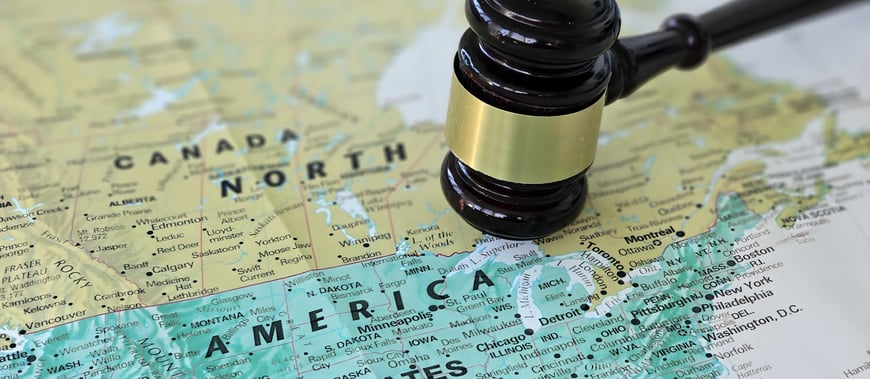
Effective September 8th, Canada imposed new 15%, 25% and 50% surtaxes on certain goods originating in the United States in response to the US section 338 tariffs on Canadian goods. Orders In Council

Effective September 8th, Canada imposed new 15%, 25% and 50% surtaxes on certain goods originating in the United States in response to the US section 338 tariffs on Canadian goods. Orders In Council
Topics: Canada, Customs, Trade Compliance, Tariffs, Surtax

A New Era of Importer Verification
U.S. Customs and Border Protection (CBP) has announced that it is implementing enhanced enforcement procedures to verify the accuracy of information submitted on CBP Form 5106, Create/Update Importer Identity Form. The initiative is one of the first public actions taken to implement Executive Order 14411, "Strengthening Customs Enforcement," signed on June 3, 2026.
Topics: United States, Customs, Trade Compliance, CBP, Importer of Record (IOR)

The numbers are hard to ignore. In FY2024, US Customs and Border Protection (CBP) collected $117.7 million through importer audits. By FY2025, that figure had doubled to $235.46 million. Through just the first seven months of FY2026, CBP had already recovered $182.22 million from only 181 audits—more than $1 million per audit [1].
Topics: United States, Customs, Trade Compliance, CBP, Executive Order
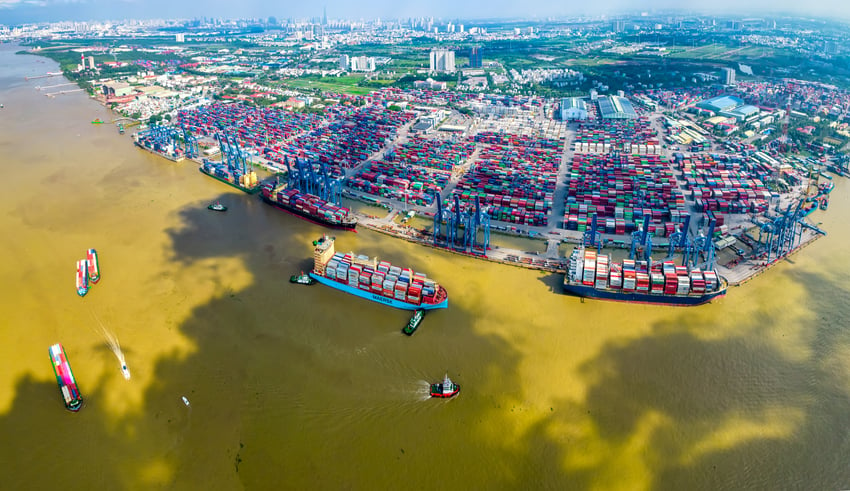
Vietnam’s Ministry of Science and Technology (MOST) issued Circular No. 30/2026/TT-BKHCN, effective 6 June 2026, to implement part of Vietnam’s strategic trade control framework under Decree No. 259/2025/ND-CP. The Circular introduces the official list of dual-use goods under MOST’s regulatory authority and sets out licensing, tracking, and traceability requirements.
Topics: Asia, United States, Customs, Trade Compliance, Vietnam, Tariffs, CBP, Managed Trade Services
On July 23, 2026, the White House issued a Presidential Memorandum directing the United States Trade Representative (USTR) to impose new Section 301 tariffs on imports from 60 economies that were investigated for failing to impose or effectively enforce prohibitions on the importation of goods produced with forced labor. The new tariffs follow the expiration of the prior 10% Section 122 tariffs on July 23rd, adding a new Section 301-based duty framework for covered imports from the investigated economies.
Topics: United States, Section 301, Tariffs, Forced Labor