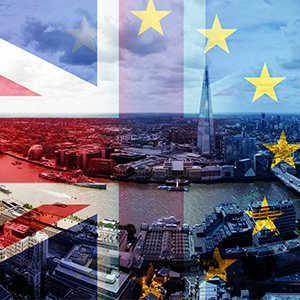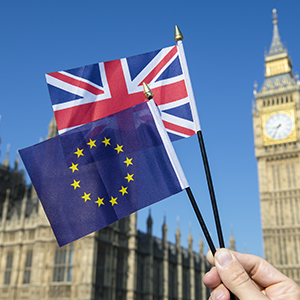


Since the Brexit referendum was held, the UK government has focused significant time and energy on establishing a negotiating position for the separation. The policy was outlined in an early February 2017 whitepaper entitled, “The United Kingdom’s Exit from and new partnership with the European Union.” While not delving into significant detail on the referendum’s impact on trade, nor the UK’s negotiating tactics, the policy document outlines the ultimate goals for the separation.
Matt Springate
Recent Posts
Topics: Europe, Free Trade Agreements
A lot has happened since the June 24th referendum in the UK to leave the European Union. Surprisingly, there may be more uncertainty now than there was immediately following the vote three months ago.
We’ve since gotten a new Prime Minister, Theresa May, who has formed a government department to manage the negotiation process with the European Union - dubbed “The Three Brexiteers.” The principle architects for the Brexit negotiation are David Davis, the Secretary of State for Brexit; Liam Fox, the International Trade Secretary; and Boris Johnson, the Foreign Secretary.
So, now that we have some clarity on who will be in charge of negotiating the terms of Britain’s exit from the European Union, we should know how the process will unfold and what impact this will have on UK, European, and global businesses, right?
Topics: Europe, Free Trade Agreements
I have come to quite enjoy the ‘Full English’ breakfast since moving to London last year. Packed with all the day’s calories and none of its nutrition, the full plate of eggs, bacon, hash browns, beans, and tomato has become a weekend favourite.
My breakfast on June 24th was a much more sensible choice of coffee and toast. However, it was made memorable by the Referendum results in Britain over whether or not we should stay in the European Union.
With all votes tallied, the United Kingdom had decided by referendum to leave the EU.
Does everyone remember Y2K?
The whole world was under the impression that, at the turn of midnight on December 31st, 1999, all our computers would simply stop functioning and we would enter the equivalent of a cyber stone age. I remember vividly sitting on the couch, watching the TV as the ball dropped in Times Square, waiting to see if all the lights were going to go off at any minute.
Alas, the lights stayed on, the computers still worked, and we all moved forward.
EU traders had a similar feeling when May 1st rolled around and the Union Customs Code (UCC) - a union-wide re-write of the customs regulations within Europe - became effective.
Did you know that the first football match Queen Elizabeth attended was the 1953 FA Cup Final? Did you know that, during her reign, there have been 12 prime ministers? Did you know that the queen has, during her entire reign, answered around three and a half million items of correspondence?
Obviously, there’s a lot to know about the Royals. They are inescapable if you live in the UK. The Queen is on all of our money; we pay taxes and import duties to Her Majesty’s Revenue and Customs (HMRC). Heck, I even pulled all those facts off of royal.gov.uk.
As a trade consultant, the Royal family is not the only kind of royalty I am interested in. There is also plenty to know about Royalty Payments and how they impact the declared value of goods when they are brought into the European Union.
Topics: Europe, Export Consulting, Import Consulting